
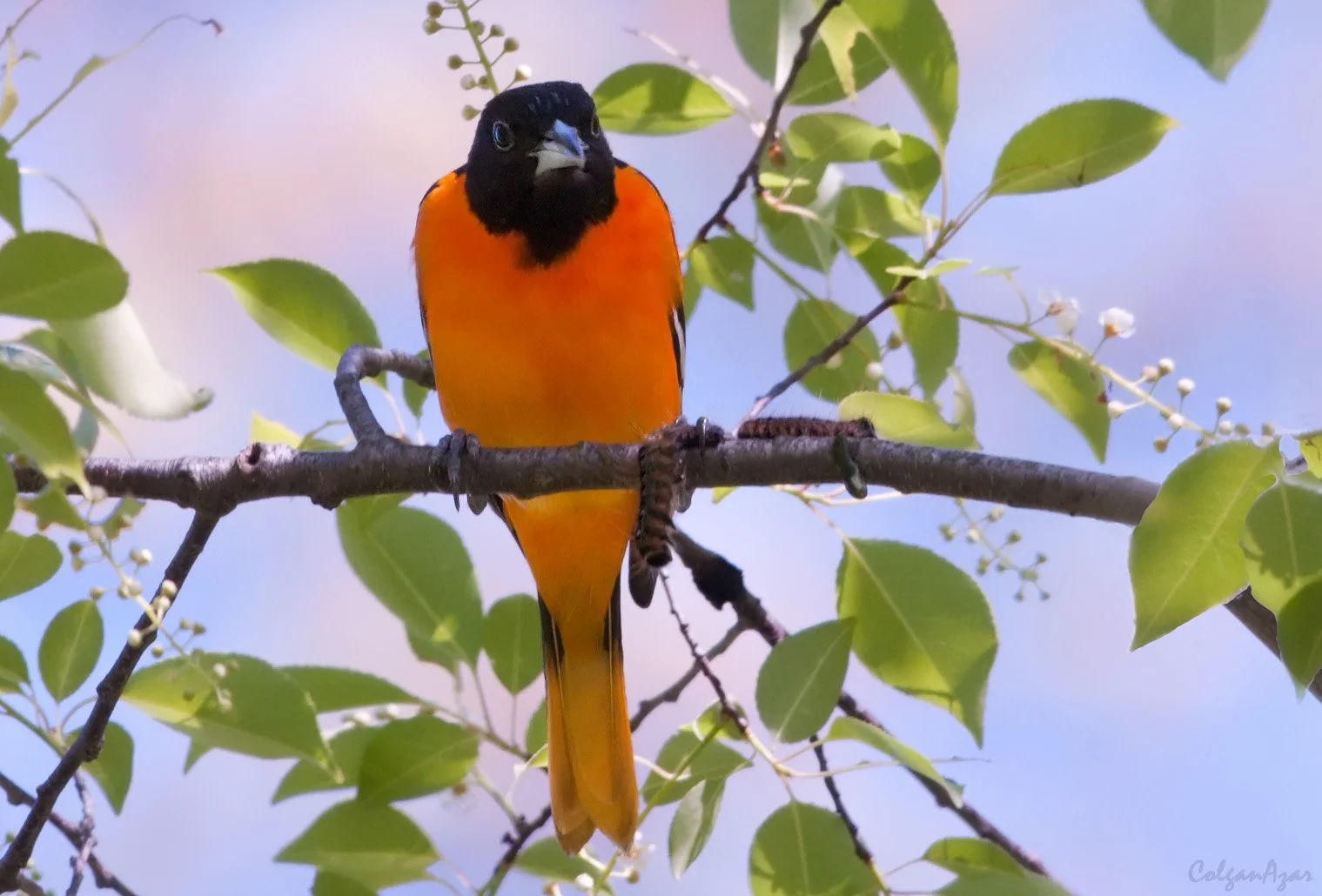
Baltimore Oriole by Kelly Colgan Azar
Alicia King, Lights Out Wisconsin and Executive Director Wisconsin Society for Ornithology,
907-268-0124 executive.director@wso.org
Carol Wesley, Lights Out Wisconsin and Kickapoo Valley Dark Sky Initiative director, carolwjean124@gmail.com
Bird migration forecasts and Lights Out Alerts land in Wisconsin
Sign up for reminders on nights of highest risk to birds
Viroqua, April 21, 2026 - For the first time this spring, Wisconsin communities have been added to the list of places receiving specific bird migration forecasts and Lights Out alerts from the scientists at Cornell Lab of Ornithology and Purdue University.
With bird migration ramping up in Wisconsin, Lights Out Wisconsin urges people to turn off outside lights at night to keep migrating birds safe, and to sign up for alerts flagging the 8-10 nights when bird migration is highest and it’s most important to turn off lights. The email alerts will remind people to turn out non-essential outdoor lights from 11 p.m. to 6 a.m.
Eighty percent of migrating birds fly at night, and artificial light can lure them off their migration paths into urban areas where they face more hazards, including windows. Birds hitting Windows kill up to 3.5 billion birds every year in the United States when birds fly into them. It is regarded as a leading reason why nearly 30% of North American birds have disappeared since 1970.
“Tens of millions of birds fly over Wisconsin in May and we need them to reach their nesting areas safely,” says Karen Etter Hale, chair of the Wisconsin Bird Conservation Partnership and part of the new Lights Out Wisconsin coalition. “Turning off lights at night during migration season, especially on those nights when the risk is highest for birds, is critical for their survival.”
“Lights Out Wisconsin formed in fall 2025 to reduce light pollution when dark skies matter most for wildlife and people. Promoting signups for Lights Out Alerts this spring is a key strategy to achieve that goal,” says Carol Wesley, a director for the Kickapoo Valley Dark Sky Initiative.
Wesley brought groups together in fall 2025 to form the coalition. “I was driving at night when I was blinded by the headlights of an oncoming car. And I thought, this is how birds must feel during their migration when trying to navigate through bright lights,” she says.
“Light pollution, especially during migration, is a danger to birds and is a source of bird mortality. Turn off your lights and save a life!”
The scientists predict the number of birds that will pass over a selected location during the night based on an analysis of 23 years of weather and radar data. They issue a Lights Out Alert whenever bird traffic is within the top 10% of nights, about 8 to 10 nights a season. These nights account for about 50% of the migration traffic.
Appleton, La Crosse, Madison and Milwaukee are the cities listed to receive specific forecasts; people living outside them should sign up for the city closest to them or another Midwestern city near them, says Adriaan Dokter, research associate and project lead for BirdCast at the Cornell Lab of Ornithology, which produces the alerts along with Purdue University. See a map showing locations.
Big waves of migration are often very large-scale and widespread, so alerts for a city within 100 miles should cover your area as well, he says.
Peak migration in Wisconsin is expected to begin May 3 in some southern counties and end May 21; and begin in northern counties a few days later and end May 27. See peak migration periods for Wisconsin communities.
The Lights Out Wisconsin coalition members encourage people to turn off nonessential lights for the duration of the migration season, March 1–June 15 for spring migration and August 15–November 30 for fall migration. People are also encouraged to take other steps to keep birds safe from light pollution and windows year-round.
Treat your worst problem window to make glass visible to birds.
Reduce risks by placing birdfeeders within three feet of a window or beyond 35 feet.
Switch to low-impact lighting. Use timers and dimmers to control when and the amount of light, fixtures that direct lights down, and “warm” color lights that are less disruptive to birds, those 2200 Kelvin or less. Learn more about why and how to reduce the impact of light pollution on Lights Out Wisconsin webpages.