
Did you know Wisconsin residents have opportunities to see the Northern Lights throughout the year, right here at home? With long nights ahead, now is a great time to keep an eye on the aurora forecast!
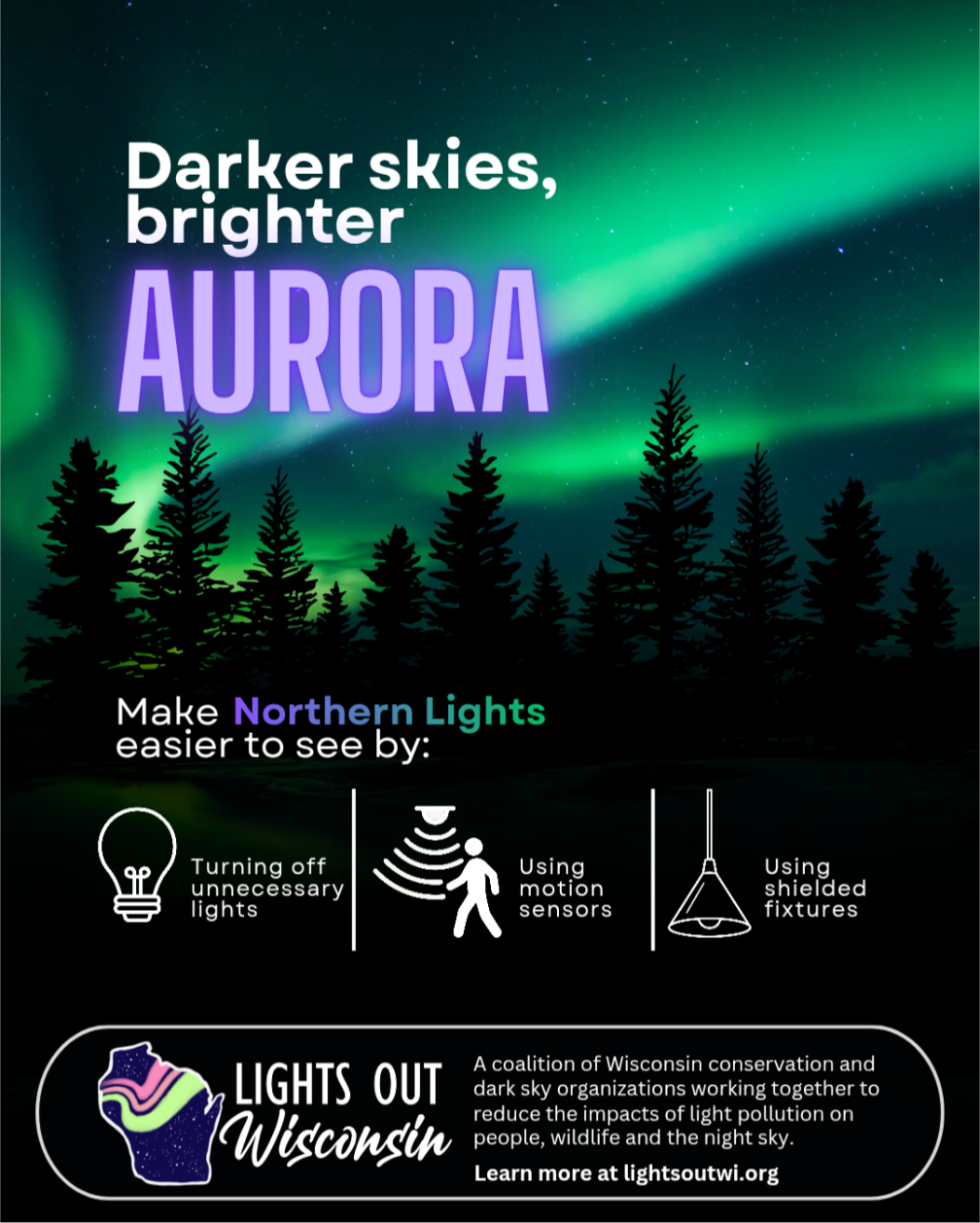
Want to improve your chances of seeing the Northern Lights? Start by turning off unnecessary outdoor lights. Light pollution brightens the night sky and washes out the colors of the aurora, making it harder to see. A darker sky means a better view when the Northern Lights appear!
Reducing light pollution doesn't mean giving up outdoor lighting. It means using light thoughtfully and only when it's needed. Here are four simple ways to make a difference:
Turn off unnecessary lights. Switch off outdoor lights when they're not needed, especially overnight.
Use motion sensors. Motion-activated lights offer a great alternative to leaving lights on all night.
Choose shielded fixtures. Look for lights that direct illumination downward instead of allowing it to spill into the sky.
Select warmer bulbs. Choose bulbs with a color temperature of 2200K or lower to reduce blue-rich light that contributes to light pollution.
These small changes help create darker skies for viewing the Northern Lights and benefit nighttime wildlife, too!
Share the alert on Facebook | Share the alert on Instagram
A Little Northern Lights 101
The Northern Lights, also called the Aurora Borealis, occur when charged particles from the sun interact with gases in Earth's atmosphere, producing colorful displays in the night sky.
Increased solar activity can trigger geomagnetic storms, making the aurora brighter and potentially visible farther south, including Wisconsin. NOAA measures storm strength on a G1–G5 scale, with stronger storms generally offering better viewing opportunities farther south.
Aurora forecasts can change quickly, so check for updates regularly!
A few viewing tips:
Find a dark location away from city lights.
Look toward the northern horizon.
Choose a clear night with minimal cloud cover.
Try viewing between 10 p.m. and 2 a.m., when auroral activity is often strongest.
Check the NOAA Aurora Dashboard for forecasts and viewing opportunities.
Explore the night sky with our partner!
Want to learn more about astronomy? Our Lights Out Wisconsin partner, Beaver Creek Reserve, offers public programming at Hobbs Observatory! The Chippewa Valley Astronomical Society hosts monthly astronomy programs and free public telescope viewing on Saturday nights from May through October (weather permitting).
Visit Beaver Creek Reserve's Hobbs Observatory page to explore upcoming programs and events.
Let's keep our skies dark!
The Northern Lights are a wonderful reminder of what we can experience when we have dark skies. By making thoughtful lighting choices every day, we can help protect nighttime environments and give ourselves and our neighbors a better chance of enjoying the night sky.
Want to learn more about reducing light pollution year-round? Visit lightsoutwi.org for more information and practical tips.
