
The Perseid Meteor Shower Peaks This Week
Help Keep Wisconsin's Skies Dark
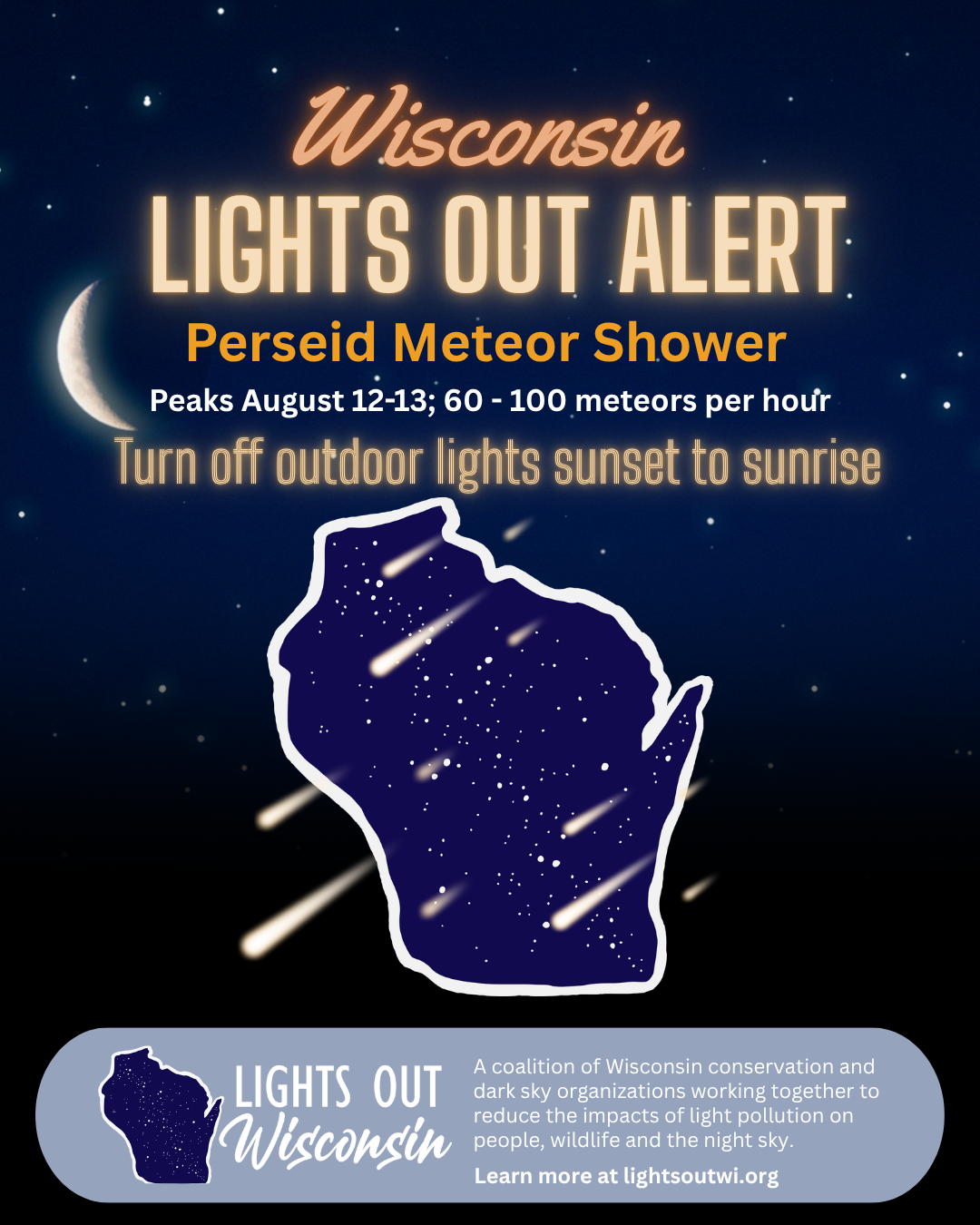
The Perseid Meteor Shower is one of the year's most spectacular night sky events, and this year, viewing conditions should be especially good thanks to dark, moonless skies. =
On the night of August 12–13, observers under dark skies could see 60–100 meteors per hour as Earth passes through debris left behind by Comet Swift-Tuttle.
Unfortunately, many people never get the chance to experience skies dark enough to fully enjoy events like the Perseids. Nearly 80% of Americans can no longer see the Milky Way from where they live because of light pollution (Falchi et al. 2016). Whole generations are growing up without ever seeing our own galaxy, and the same light pollution that washes out the Milky Way also makes meteor showers far more difficult to see.
This week, Lights Out Wisconsin is encouraging everyone to help restore darker skies by turning off or dimming non-essential outdoor lighting and closing window shades or blinds to reduce light spill to the outdoors.
While you're watching...
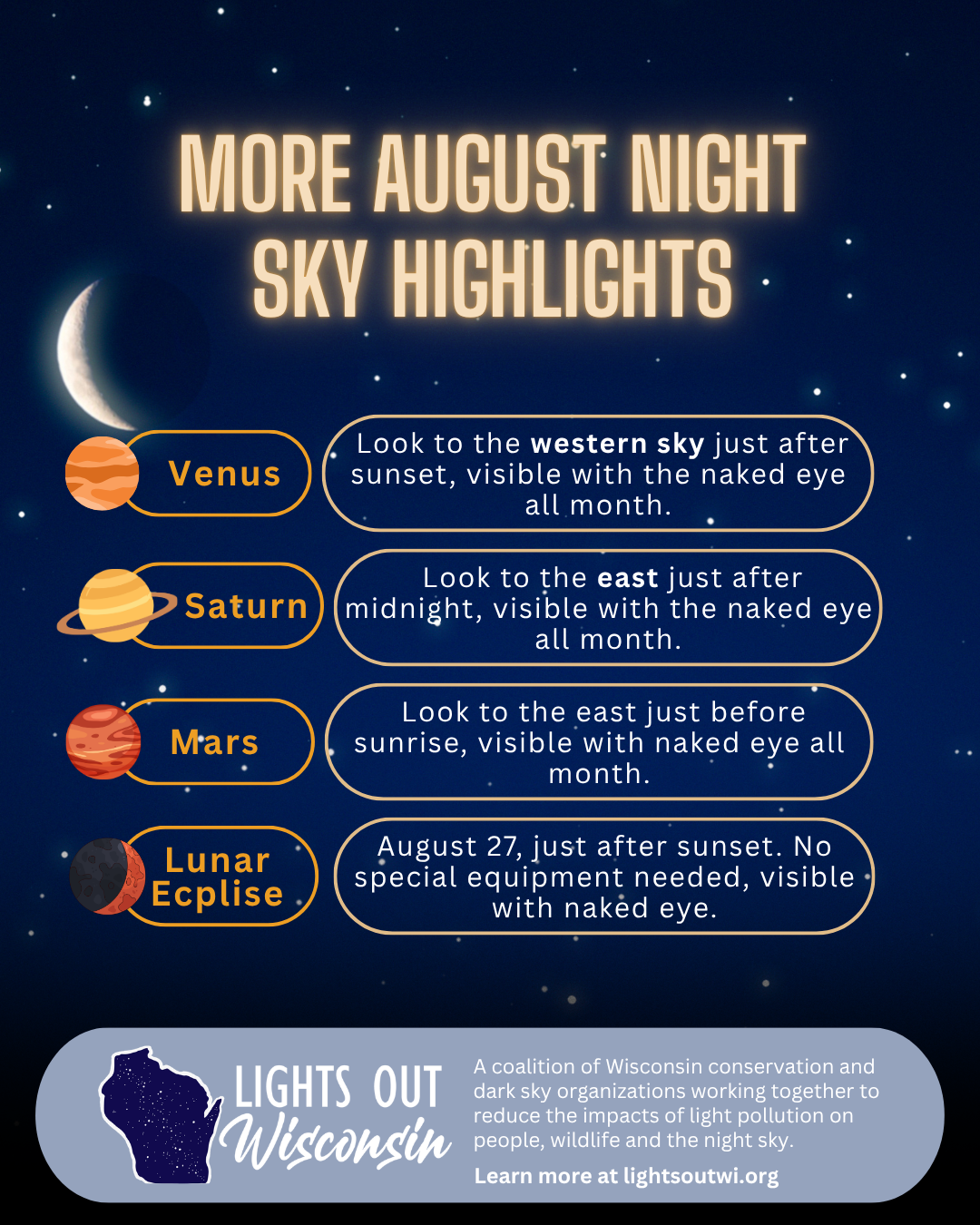
Keep an eye out for more than just meteors! Depending on viewing conditions, you'll also have the chance to spot these planets all month long:
Easy observations - visible with the naked eye
Venus — the brightest planet and the brightest object in the sky after the sun and moon. Visible throughout August in the western sky after sunset. It gradually appears lower in the sky as the month goes on. On August 15–16, the thin crescent Moon will appear close to Venus, making for a particularly attractive view.
Saturn — Visible throughout August, rising in the east after midnight (and earlier as the month progresses).
Mars — Visible throughout August before sunrise in the eastern sky.
More challenging observations - binoculars may help
Jupiter/Mercury — the largest and smallest planets in the solar system will appear VERY close in the sky just before dawn on the morning of August 15. Look very low in the east about 30-45 minutes before sunrise. Jupiter will be very bright but very low on the horizon. Mercury will be dimmer, just to the left and slightly above Jupiter. The two planets will be separated by only ½ degree, about the width of the full moon. Jupiter will be easy to spot. Binoculars may help you to catch Mercury, which will be a little harder to see depending on how much the impending dawn is brightening your sky.
And, don’t miss the total lunar eclipse just after sunset on August 27. This infrequent and dramatic event is great for family viewing, not too late at night and no special equipment required! By about 9 PM, you’ll notice a darkening along the lower left edge of the full moon. This is the encroaching shadow of the Earth cast by the sun, now below the horizon behind you. Watch over the next few hours as the moon’s disk will be nearly completely covered by the shadow, creating a nearly total lunar eclipse. The moon’s disk will turn a deep orange color.
PLUS: The night skies are filled with insect activity -- learn more about which species are active, what they're up to, and how you can help them through the Wisconsin Women in Conservation's free webinar on August 20 focused on Invertebrates after Dark!
Enjoy dark skies all year long
There are simple steps we can all take to reduce light pollution and enjoy better night skies every night.
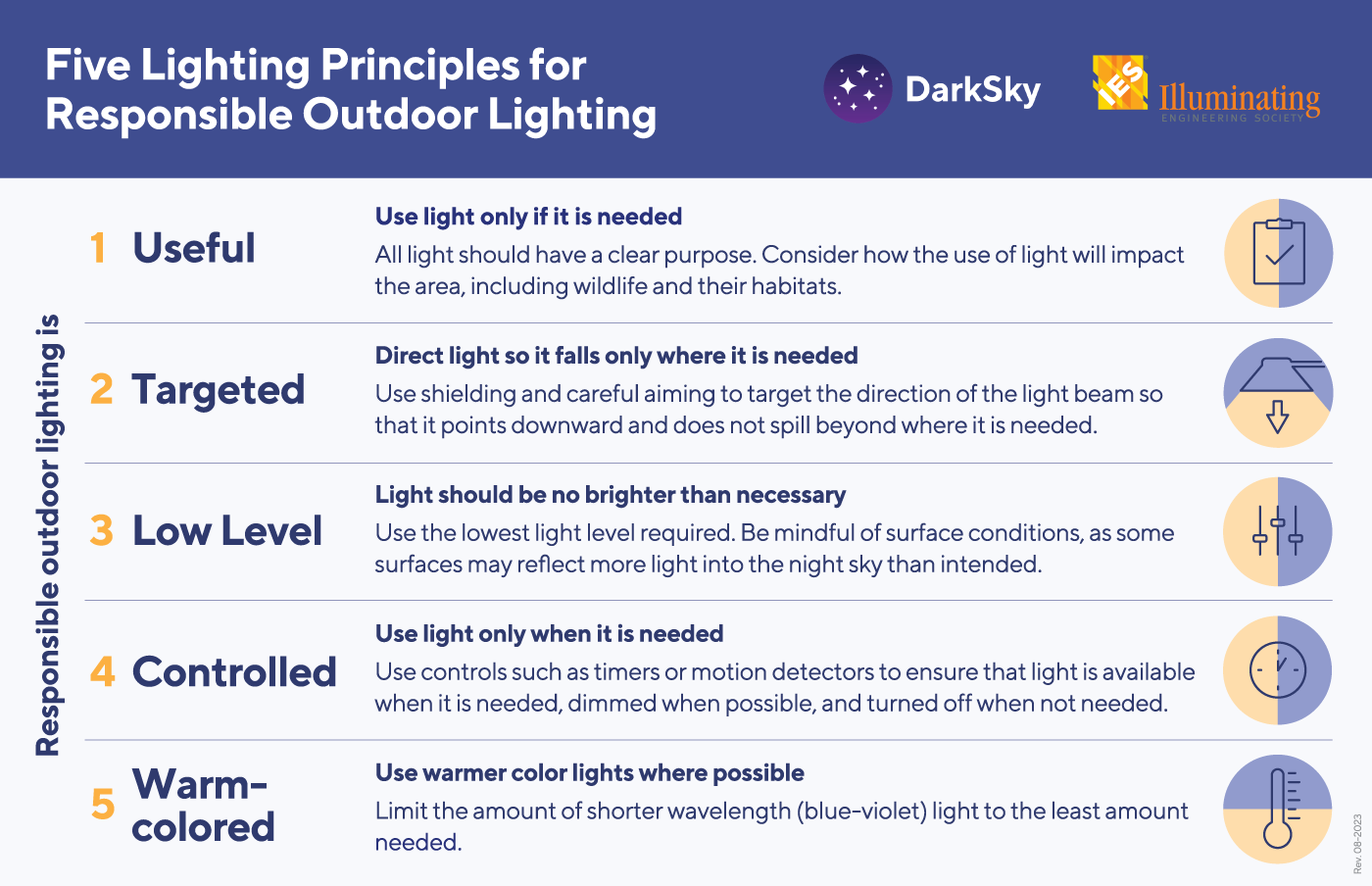
Follow the 5 Principles for Responsible Outdoor Lighting:
Whether you're watching from your backyard or heading to one of Wisconsin's darker skies, every light turned off makes a difference for our communities
Learn more and sign up for alerts on the Lights Out Wisconsin website
Lights Out Wisconsin is a coalition of Wisconsin conservation groups and dark sky organizations working together to reduce the impacts of light poll.
